
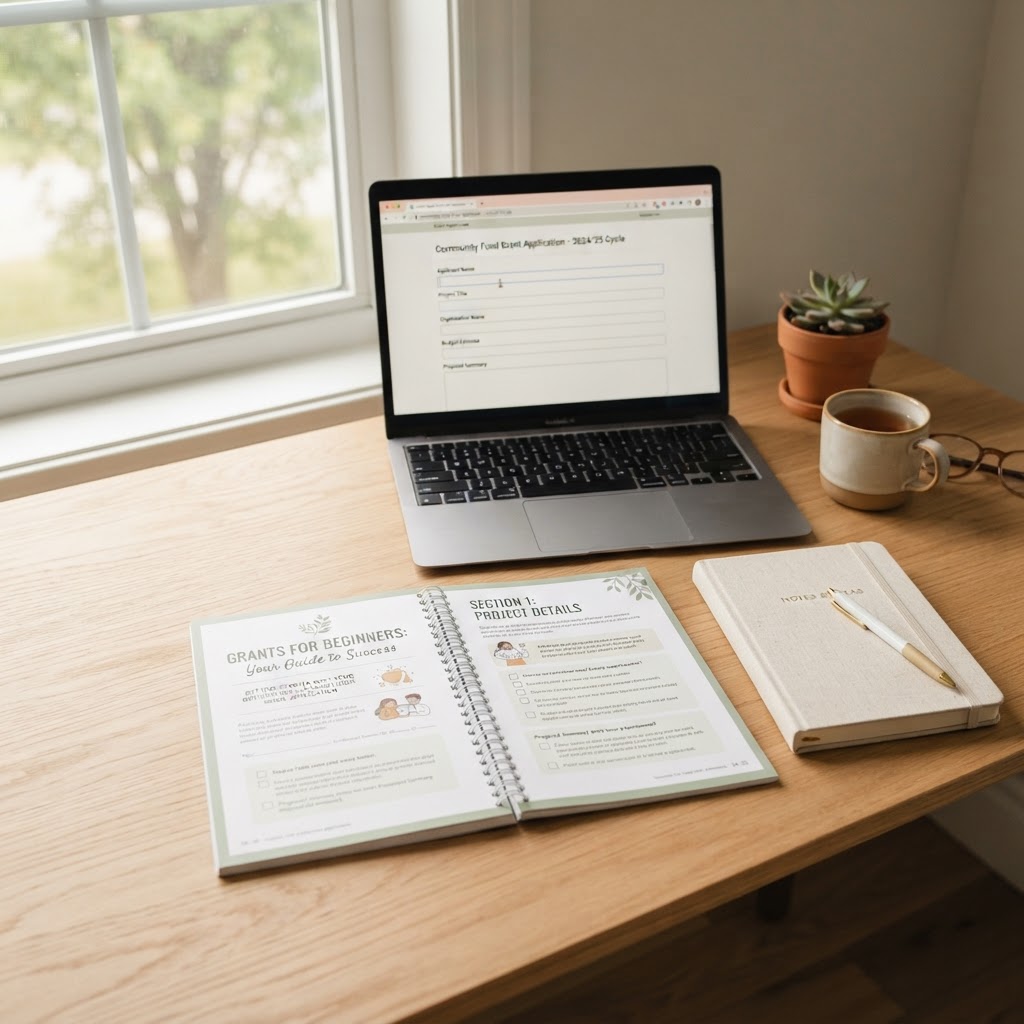
Grant Writing for Beginners: Your Complete Guide to Getting Started
New to grant writing? This beginner's guide breaks down what grants are, who qualifies, and the exact steps to write your first winning application — no experience required.
Grant Search US President
President, Grant Search US
Grant Writing for Beginners: Your Complete Guide to Getting Started
If you have never written a grant before, you are in the right place. Grant writing feels intimidating from the outside. The applications are dense, the acronyms are confusing, and nobody likes the thought of putting in hours of work only to get a rejection letter.
But once you understand the fundamentals, it becomes a learnable, repeatable skill. Most people who are good at it were not born that way. They just wrote enough applications to stop being scared of them.
What a grant actually is
A grant is money awarded by a government agency, foundation, or corporation to fund a specific project or program. It does not need to be repaid like a loan. But it almost always comes with strings: a defined scope, a budget, a timeline, and reporting requirements. You are not being given a gift. You are being entrusted with someone else's money to do something specific.
That distinction matters. A lot of first-time grant writers treat the application like a fundraising letter. It is not. It is a contract proposal. The funder is asking: can this organization do this specific work, with this specific budget, and prove it worked?
Who qualifies for grants
Grants are not just for large universities, though sometimes it feels that way. Eligible applicants include:
- 501(c)(3) nonprofits, which are the most common recipients
- Small businesses, especially through SBIR, STTR, and state programs
- Schools and educators, through federal and foundation education grants
- Researchers, through NIH, NSF, and private foundations
- Tribal organizations, libraries, museums, and faith-based groups
- Individuals, in a smaller but real set of cases (fellowships, artist grants, some research awards)
If you are not sure whether you qualify for a given grant, the eligibility section of the posting will tell you. Read it carefully. A lot of wasted applications come from people skipping that section.
The parts of a grant application
Most grant applications, no matter the funder, break down into a few core pieces:
The need statement. What problem are you addressing, and why does it matter? This is where you make the case that something needs to happen. Back it with data when you can, but do not drown the reader in statistics.
The project description. What exactly will you do? Be specific. Vague proposals lose. "We will run an after-school program serving 40 students" beats "we will help young people in our community."
The budget. What will the money go toward, and does it add up? Funders read budgets closely. A budget that does not match the narrative is a red flag.
The evaluation plan. How will you know it worked? You do not need a PhD in evaluation, but you need to show you have thought about how to measure success.
Organizational capacity. Why are you the right group to do this? Past performance, staff qualifications, and track matter.
The steps to your first application
- Find a grant you actually qualify for. This is half the battle. Do not apply to things you are not eligible for.
- Read the guidelines twice. The first time to understand. The second time to catch what you missed.
- Build a checklist from the guidelines. Every requirement, every attachment, every formatting rule. Missing one is the easiest way to get rejected.
- Draft the narrative. Write it badly first. Get it on the page. Then revise.
- Build the budget. Make it real. Get actual quotes, actual salaries, actual costs.
- Have someone else read it. Someone who was not involved in writing it. They will catch what you cannot.
- Submit early if you can. Portals crash on deadline day. Every time.
A few things I wish someone had told me
Your first application will probably lose. That is normal. The national average for federal grant win rates is around 20 to 30 percent. For foundations it varies wildly. Treat every application as practice for the next one, and keep the pieces you wrote because you will reuse them.
Also: keep your narrative sections. Needs statements, organizational descriptions, evaluation plans. These are reusable. After your first few applications, you will have a library of building blocks and the next one will take half as long.
Where to go from here
If you want a tool that walks you through this, we built one. It pre-fills from your organization's profile, helps you draft each section, and keeps your reusable pieces in one place. But even without it, the steps above are enough to write your first real application.
The only way to get good at grant writing is to write grants. So find one you qualify for, and start.
Written by the President, Grant Search US