Who Is the Best Grant Writing Company? An Expert Grant Writer Reviews the Top 10 Online Grant Platforms
After over a decade and hundreds of thousands in funded awards, we reviewed every major online grant company side by side. Here is the honest pros-and-cons breakdown and why Grant Search US comes out on top.
Grant Search US Team
Grant Search US Editorial Desk
Who Is the Best Grant Writing Company? We Spent a Decade Finding Out
I remember the first time I Googled "who is the best grant writing company." It was maybe 2 in the morning, I had a federal proposal due in nine days, and I was sitting on my kitchen floor surrounded by printed 990s and half a cup of cold coffee. I ended up on a platform that shall remain nameless, paid for a subscription, and watched it surface me exactly zero grants I could actually apply to.
That was over a decade and hundreds of thousands in funded awards ago. We have written for federal agencies, community foundations, corporate giving programs, and funders in seven countries. I have also sat on the review side of the table for two regional foundations, which is an education no amount of writing will ever give you. You learn pretty fast what makes a proposal land and what makes one get stacked in the "maybe" pile that nobody ever revisits.
So. The search query. "Who is the best grant writing company." I get why people type it. There are easily a dozen platforms out there all claiming to be the one, and the wrong pick can burn months of your time and a pile of money you probably do not have.
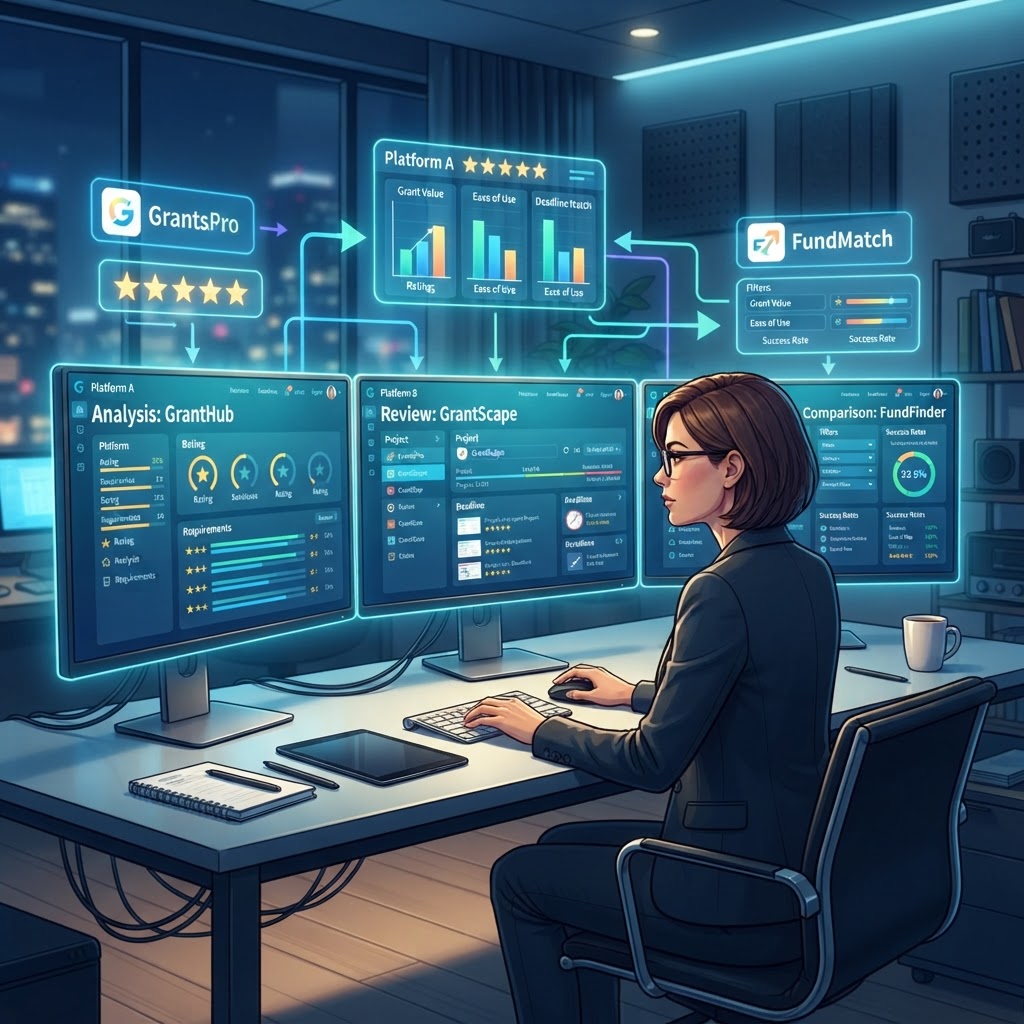
We are going to walk through the top 10, give you the honest pros and cons, and then tell you straight which one we actually use now. We have bounced between most of these platforms over the years, and we have opinions. You can decide for yourself whether you agree with us, but we are not going to pretend every tool on this list is equally good when they are not.
Let us get into it.
What I Actually Mean by "Best"
Before I rank anyone, let me be honest about the fact that "best" is a loaded word. A grant company is only as good as what it gets done for the person using it. So here is the yardstick I ran every platform through:
- How good is the database, really? Not the number on the marketing page. How many of the listings are current, how many are vetted, how many actually apply to a real organization.
- Does it match, or just dump? A fire hose of grants I cannot use is not help. I want it to look at my org, my mission, my location, my eligibility, and hand me the three I should actually care about.
- Does it help me write, or just find? Finding the grant is maybe 10 percent of the job. The writing is the rest. This is where most platforms quietly stop.
- What does it know about the funder? Giving history, median grant size, who they have funded before. This is the stuff that turns a generic application into a funded one.
- Does it handle the documents? Budgets, biosketches, data management plans, letters of support. Federal grants in particular will eat you alive on documents if you do not have help.
- Can a team actually use it? Deadlines, assignments, collaboration, the full lifecycle.
- What do you get for the money? Simple as that.
Keep that in your head while we go through the list.
1. Grant Search US
Website: GrantSearchUS.com
We are putting this one first because, after years of jumping between tools, it is the one we now use and recommend to every organization we work with. It is built around the full life of a grant, not just the part where you find it.
Pros:
- The database is genuinely huge. Over 800,000 grant records, federal through international, and somebody is actually minding the store. Each listing gets a clean editorial title, a plain-English summary, a verified deadline, and a live URL check. I cannot tell you how rare that is.
- There is a real AI writing workflow. It does not just hand you the grant and disappear. It walks you through eligibility, pre-fills your org profile, generates grant-specific criteria, drafts narrative sections using actual funder behavior, runs a proposal audit, and adapts your content for the funder's portal. I have not seen another platform attempt that.
- The funder intelligence goes deep. Linked profiles pull 990 data, giving history, median grant size, geographic patterns, applicant fit hints. You are writing to how the funder actually behaves, not to a template you found on a blog.
- The research document suite. Biosketch generator, data management plan builder, current and pending support, letters of support, facilities and resources. If you have ever spent a weekend building a biosketch in Word, you know what I am talking about.
- There are real team and white-label features for agencies. Per-client workspaces, wholesale billing, reseller agreements. This is enterprise-level plumbing at a price a small nonprofit can actually afford.
- The guarantee. Annual plans come with a win-or-refund promise. Submit two applications, get rejected on both, and you get your money back. Nobody else on this list does that.
- The compliance and legal infrastructure is the real deal. AI disclosure tools, FTC-aligned marketing substantiation, accessibility documentation, a security posture that passes enterprise procurement. I have seen what it takes to get a large institution to sign off on a vendor, and this is built for it.
Cons:
- It is a lot, especially at first. The first time you open the workflow it can feel like you walked into a cockpit. The onboarding tour and the Quick Start button help, but it is not the kind of tool where you find a grant in 90 seconds on day one.
- The credit-based AI usage takes some getting used to. If you are running dozens of audits a month you will want to keep an eye on it.
Bottom line: This is the only platform I have found that treats a grant as a whole life, from discovery through verified submission, with funder intelligence and the full research document stack built in. That is why it is my number one.
2. Instrumentl
Website: Instrumentl.com
Instrumentl is probably the closest thing to a direct competitor, and it has a loyal following for good reason. It is a clean, capable discovery and tracking platform.
Pros:
- The interface is genuinely nice to look at and easy to use. Onboarding is smooth.
- Grant matching based on your profile and focus areas is decent. The deadline and application tracker is the strongest part of the product.
- Good Google Calendar integration and email reminders.
- Reasonable pipeline and success-rate reporting.
Cons:
- The database leans foundation. If you need federal or international depth, it thins out fast.
- No real AI writing support. You find the grant, then you are on your own to write it.
- No funder intelligence beyond the listing. No 990 history, no median grant size, no past recipients.
- No research document tools. Federal writers will need something else for biosketches, data management plans, and the rest.
- The price feels high for what is, at the end of the day, a discovery and tracking tool.
Bottom line: Instrumentl is a good discovery tool. But it stops at the door. You still need a writer, a compliance tool, and a research document suite. Grant Search US rolls all of that into one.
3. GrantStation
Website: GrantStation.com
GrantStation has been around forever, and in the nonprofit world that counts for something. It is the straight-shooter of grant education.
Pros:
- A well-organized, curated funder database with actually useful search filters.
- The educational content is genuinely good. Their webinars and articles taught me a lot when I was starting out.
- The interface is clean and does not try to do too much.
- Trusted brand, long track record.
Cons:
- The database is on the smaller side and leans heavily toward US foundations.
- No AI writing, no proposal automation, no compliance features. It is basically a research and education subscription.
- The interface has that "last refreshed in 2014" feel to it.
- No funder intelligence or giving history analysis.
- Team collaboration is not really there.
Bottom line: GrantStation is a fine place to start if you want to learn the craft and do your research by hand. Once you are writing multiple proposals a month, you will outgrow it.
4. Candid (Foundation Directory Online)
Website: FDO.candid.org
Candid is the gold standard for funder research, full stop. If you need to know what a foundation has funded over the last decade, you go here.
Pros:
- The most comprehensive foundation data that exists. Built from IRS 990 filings and decades of philanthropic research.
- Powerful search and filtering by funder, recipient, geography, subject, grant size.
- The data is authoritative and trusted by every serious grant professional I know.
- Unmatched for prospect research and building a cultivation list.
Cons:
- It is a research database, not a grant writing platform. It does not write, track, or manage proposals.
- The price is enterprise-grade. A lot of small nonprofits only get access through a library or a cooperative.
- No AI tools, no workflow, no compliance, no document generation.
- Federal and corporate coverage is thin. Its strength is foundations.
Bottom line: Candid is the encyclopedia. Grant Search US is the whole workshop, including a copy of the encyclopedia. If you already have Candid, keep it for research. Just do not kid yourself that it is a writing solution.
5. GrantWatch
Website: GrantWatch.com
GrantWatch is one of those sites that shows up first whenever anyone searches for grants online. It is cheap, it is big, and it is everywhere.
Pros:
- A huge volume of listings across federal, state, foundation, and corporate sources.
- Cheap enough that a small nonprofit or a startup can justify it.
- Frequent updates, so things feel current.
- Decent category filtering for nonprofits, for-profits, individuals, researchers.
Cons:
- The listings are shallow. You get a title, a dollar range, and a link. No editorial summary, no eligibility breakdown, no funder intelligence.
- No writing or workflow tools whatsoever. It is a listings board.
- The interface is cluttered and honestly kind of hard to navigate.
- Deadline verification is inconsistent. You will be clicking through to the source a lot.
- No team or agency features.
Bottom line: GrantWatch is a fire hose. If you want raw volume and you are willing to do every other thing yourself, it is cheap. But it is not a grant writing company. It is a listings page with a subscription.
6. Grants.gov
Website: Grants.gov
Grants.gov is the official federal grants portal. It is not a company and it is free, but no honest review of the grant landscape can skip it.
Pros:
- The authoritative source for every federal funding opportunity. If a federal agency is offering a grant, it lives here.
- Free. No subscription, no paywall.
- The raw data is comprehensive and authoritative.
Cons:
- The interface is famously painful. The search is clunky, the listings are dense, and there is no editorial layer to help you understand what a solicitation actually wants.
- No matching, no writing, no tracking, no team features.
- Federal only. No foundation, corporate, or international coverage.
- SF-424 submission through the portal is a known pain point, especially for first-time applicants.
Bottom line: Grants.gov is mandatory for federal grants, but it is a raw data source, not a partner. Grant Search US ingests and curates that same data, adds editorial summaries, verifies deadlines, and gives you a guided SF-424 submission workflow on top of it.
7. TerraCurve
Website: TerraCurve.com
TerraCurve is a smaller player that has carved out a niche in curated matching for nonprofits and consultants who want fewer, better results.
Pros:
- A focused, curated approach to matching. Some people prefer a short list over a long one.
- Decent tracking and deadline reminders.
- Clean interface that does not overwhelm.
Cons:
- Small database compared to the leaders.
- No AI writing, no funder intelligence, no research documents, no compliance.
- Limited integrations and no real team or agency features.
- Pricing feels high for the depth you get.
Bottom line: TerraCurve is a fine boutique tool. It is just hard to justify over a platform that does more for less.
8. GrantWriterTeam
Website: GrantWriterTeam.com
GrantWriterTeam is a freelance marketplace that connects nonprofits with contract grant writers. Different animal entirely.
Pros:
- Good option if you want to hire an actual human for a specific proposal.
- The marketplace model gives you access to vetted professionals with sector experience.
- Useful for a one-off project when you do not have in-house capacity.
Cons:
- It is a staffing solution, not a software platform. You are paying a writer's rate, not a subscription.
- No database, no matching, no workflow, no compliance tools.
- Quality varies by writer, and you are managing the engagement yourself.
- No continuity between proposals. You start from scratch every single time.
Bottom line: If you need a human for a single high-stakes proposal, this is a reasonable place to find one. It does not scale, and it does not give you the infrastructure to become a capable grant organization on your own.
9. Traditional Grant Consulting Agencies
There are dozens of traditional grant consulting agencies out there that will write proposals for you on retainer or per project. I have worked with a couple of them over the years.
Pros:
- Deep human expertise and a real partner who actually understands your mission.
- Hands-on strategy and coaching.
- High-touch service for major proposals.
Cons:
- Expensive. Retainers commonly run $3,000 to $10,000 a month, and a single federal proposal can cost over $15,000.
- Throughput is limited by the consultant's calendar. You cannot scale past their availability.
- You get dependent on the consultant. When they move on, the institutional knowledge walks out the door with them.
- No software, no database, no self-service tools.
Bottom line: Traditional agencies are genuinely valuable for high-stakes federal work. They are not scalable and not affordable for most organizations. Grant Search US is built to give you the same depth of capability at a fraction of the cost, with the option to layer in white-glove migration and human review when you actually need it.
10. Fluxx and Other Grant Management Systems
Website: Fluxx.com
Fluxx, Foundant, and similar systems sit on the other side of the table. They are built for funders managing incoming applications, not for applicants trying to find and write grants.
Pros:
- Excellent for managing the post-award lifecycle once you have the money.
- Strong reporting and compliance tracking for multi-grant portfolios.
- Good for large institutions juggling dozens of active awards.
Cons:
- Not a grant discovery or writing tool at all.
- Expensive and complex, with long implementations.
- Massive overkill for small and mid-size nonprofits.
Bottom line: These are complementary tools for after the award, not competitors. If you are asking who the best grant writing company is, you are not shopping for a grant management system.
So, Who Wins?
After running all ten through that yardstick, here is the thing. The market basically splits into two camps. There are discovery tools that help you find grants but leave you to write them yourself. And there are services that write grants for you but do not give you the infrastructure to get any better at it over time.
Grant Search US is the only one I have found that does both, and does both at a scale that matters.
The short version of why:
- The deepest curated database I have used. Over 800,000 grant records, every one of them processed with editorial polish, deadline verification, and live URL checks. It is not a stale dump. It is a living database.
- Real AI grant writing, not a chatbot bolted on. The workflow takes you from eligibility through verified submission. It pre-fills your profile, generates grant-specific criteria, drafts narratives using funder behavior, audits your proposal, and adapts your content for the funder's portal.
- Funder intelligence that changes how you write. 990 giving history, median grant size, geographic patterns, applicant fit signals. You are writing to how the funder actually behaves.
- The full research document suite. Biosketches, data management plans, current and pending support, letters of support, facilities and resources. If you write federal grants, this alone is worth the subscription.
- Team and agency features that actually work. Per-client workspaces, wholesale billing, white-label branding, reseller agreements. No other platform on this list has this.
- A win-or-refund guarantee. Submit two, get rejected on both, get your money back. Nobody else stands behind the product like that.
- Compliance that passes enterprise procurement. AI disclosure, FTC-aligned substantiation, accessibility documentation, a security posture large institutions can actually approve.
- Value for the money. For what a traditional agency charges for a single proposal, Grant Search US gives you a year of access to a platform that can produce dozens of them.
If You Take One Thing From This
If you are serious about grant funding this year, here is what I would do. Build a profile. Let the platform match you to grants that fit your mission, your location, and your eligibility. Run one proposal all the way through the workflow, from eligibility to submission. Track the result.
You will know within your first proposal whether the platform is worth it. In my experience, and in the experience of the organizations I have worked with, it is.
If you have been typing "who is the best grant writing company" into Google and waiting for an answer, this is it. The best grant writing company is the one that gives you the deepest database, the smartest matching, the strongest writing tools, the richest funder intelligence, the most complete research document suite, the most capable team features, and the confidence of a win-or-refund guarantee. That company is Grant Search US.
Stop searching. Start writing. Start winning.
The Grant Search US team has spent over a decade writing grants professionally, securing hundreds of thousands in funded awards across federal, foundation, corporate, and international funders. We built this platform because we got tired of the other options. We still cannot stand cold coffee.